



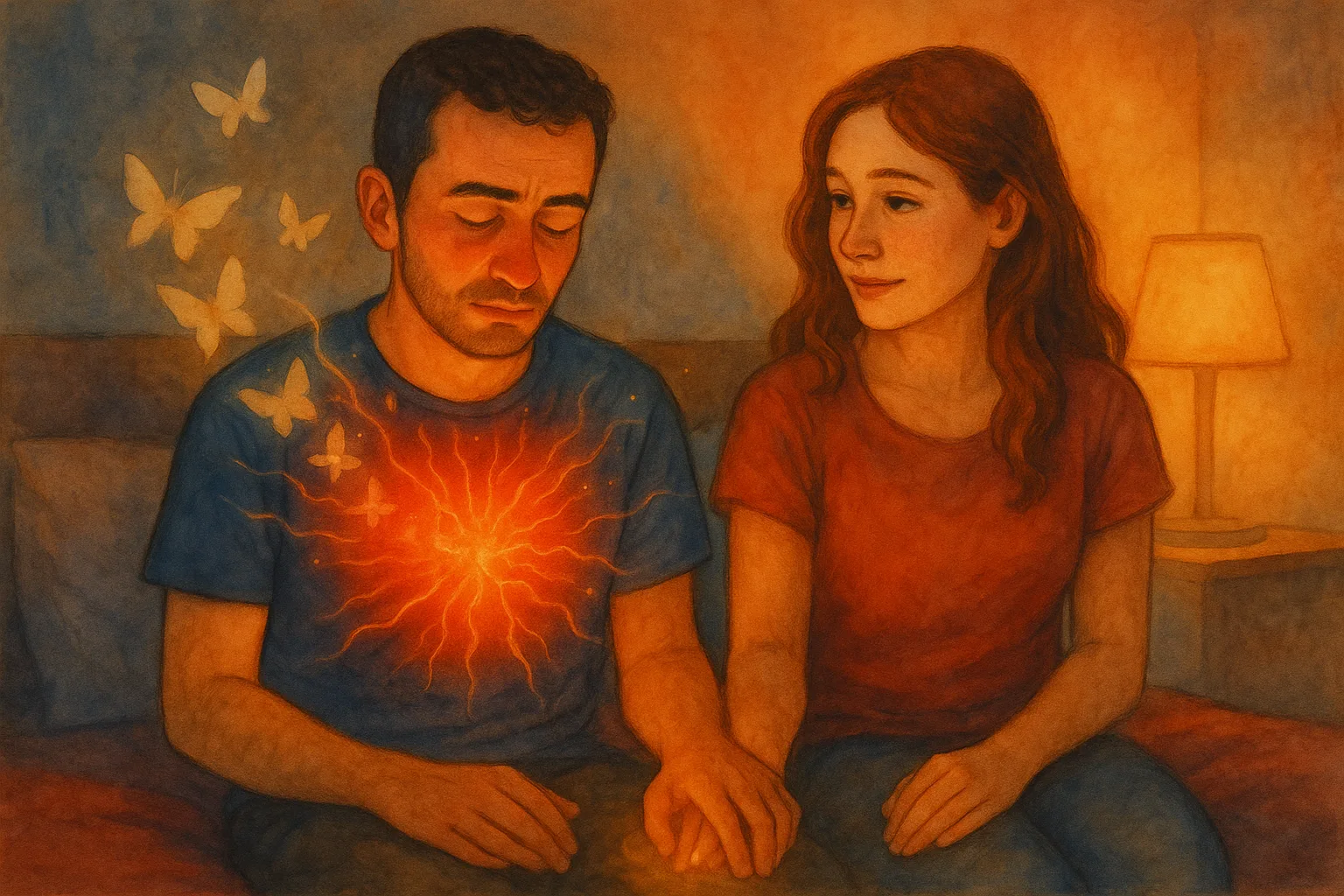
A former friend once asked me how I perceived being in love. I replied that it was “a whole lot of unpleasant sensations in the body.” I had not yet been diagnosed, and it amused him a great deal. He had never heard that kind of description before, and my answer was instinctive. I myself think I had indeed never encountered this description elsewhere (I had even researched it thoroughly, like a diligent student, to break it down).
I had truly been in love twice in my life. Although, to this day, I have thought I was two more times—but I will come back to that. My autism can ultimately easily explain this experience. Emotions manifest through physical signs. Love generally activates internal receptors. You know: that heart beating very fast and hard, that sensation of warmth, and the muscular tension that comes with it. All of this can very quickly be associated with a surplus of sensations, especially for autistic people with sensory sensitivities. Where people feel butterflies, I felt an electrical overload, which intensified in the presence of the person I was in love with.
Autistic people are also often prone to alexithymia. This is a difficulty in recognizing and understanding one’s emotions. That is my case. I imagine that distinguishing anxiety from excitement must have been difficult for me, hence a biased perception of my bodily signals.
My autism has strongly affected the nature of my romantic feelings, regardless of my state of psychological stability: euthymic (stable), depressive, or manic. This last state, however, can make these experiences very singular.
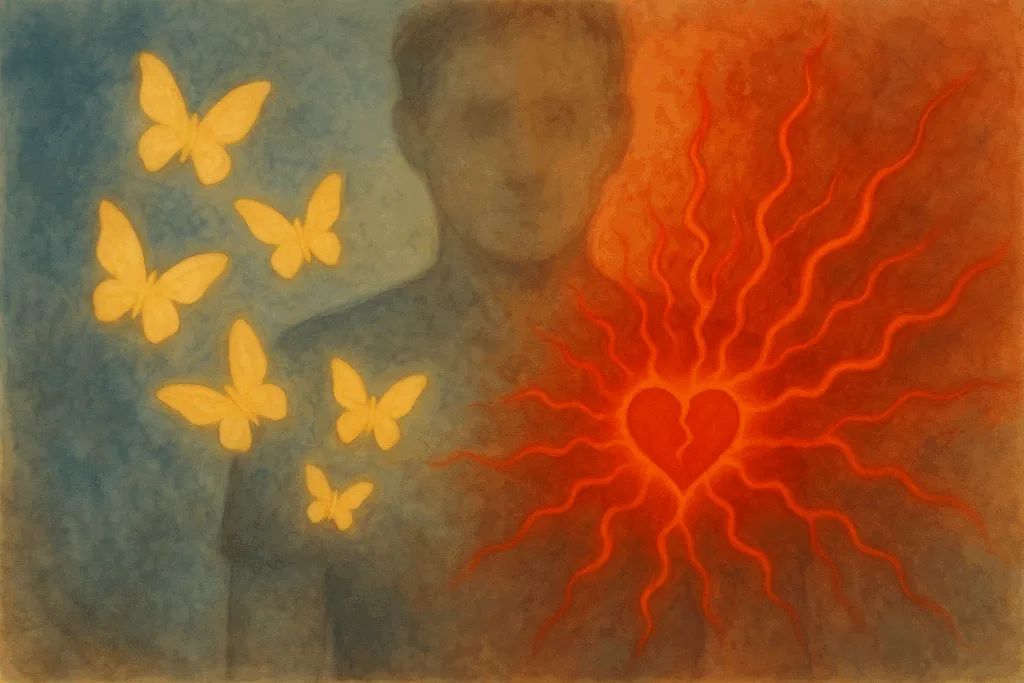
Autistic people often feel their emotions very intensely, which can translate into total devotion to the other person when they fall in love, and into free fall when they are confronted with rejection. The more rejections accumulate, the more they are at risk of losing confidence. I will describe here several ways in which my romantic feelings have manifested.
Real feelings
Those two times when I was in love, I was each time placed in uncomfortable positions. The experience then oscillated between wonder and confusion, and sometimes even resulted in strong frustration.
The first time I fell in love was relatively late: I was about to turn 21. I had had a few “crushes” around high school, but that was as far as it went. Among autistic people — even though it varies greatly — first romantic feelings often appear in late adolescence or early adulthood, later than in allistic people.
The birth of the first feelings
At that time, I was spending much of my time oscillating between depressive episodes and hypomanic episodes. I was also spending more time partying in apartments with a new small group of friends that would become a foundation in my life. A young woman was always present, with whom I spent all my weekends. Feelings developed quickly, in a very intense way. Since it was the first time, it took a while for me to identify these feelings.
Events brought us closer together, my feelings kept intensifying, which left me very confused. I did not know whether I was truly in love or simply exceptionally close to her. In the end, when she explained that she did not share my feelings, I felt relieved. We talked at length, she was reassuring, and we both shared that we saw each other as best friends. I will always remember the sensation that flooded me and short-circuited the sadness of romantic disappointment: I had a best friend. I was like a child. I had not failed; I had strengthened a relationship (which would become (too) unique). And the sensory overload eventually calmed down.
We became very close: it was with her that I was able to have my first hugs without rejecting them, it was with her that I discovered what tenderness meant. I was in an in-between state: I was no longer in love, but I still saw her as more than a best friend. She broke down all my social and sensory barriers, opening the door to the expression of my emotions.
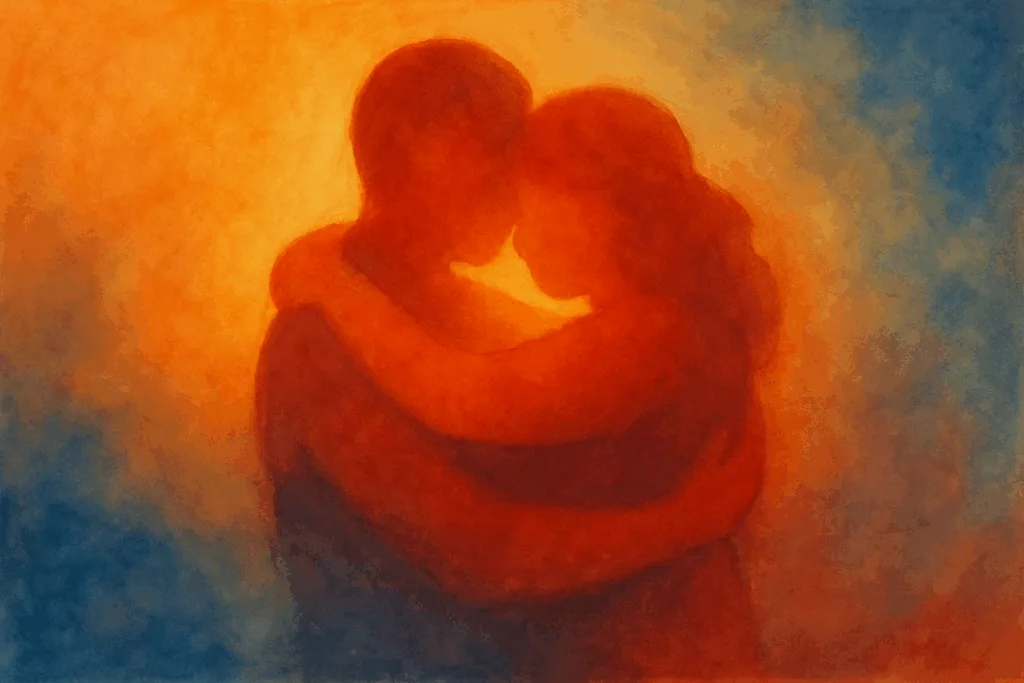
Highly conflicting romantic feelings
The second time I fell in love, against all expectations and to my detriment, was in a psychiatric hospital. This followed a bipolar mixed episode that turned into a manic episode once I arrived at the hospital. The young woman toward whom these feelings emerged was depressed. We quickly clicked while I was showing off at dinner time because I was euphoric. We ended up sharing long conversations and moments together, and feelings were born from this natural closeness (but amplified by the manic episode).
I had a positive impact on her, and when we were together, she no longer seemed at rock bottom. She had an impact on me, because it was the first time I perceived reciprocal romantic interest from a woman. I then began to spend as much time as possible with her, doing unusual hospital activities simply to accompany her. We shared moments of silence and tenderness, hugs made possible because my sensory barriers had collapsed under the effect of mania. Even the most ordinary contact electrified my body. And finally, a first kiss (which I had even written in my calendar), at age 23.
As a small anecdote: I discovered that I very drastically rejected certain forms of kissing, intrusive and sensorily overwhelming. The experience was therefore new and euphoric, but autistically confusing, even unpleasant. French kissing is not already pleasant for all allistic people, but for autistic people it can be very disorienting, as it seems unpredictable and requires a letting go that not everyone can necessarily produce. The contact of faces, lips, tongue, saliva—all of this can be destabilizing. I even caught myself remembering that I was supposed to close my eyes. My eyes were literally wide open because I did not know what to do: I needed a manual for an experience that nevertheless seemed so fascinating to the majority.
In love in the midst of psychosis
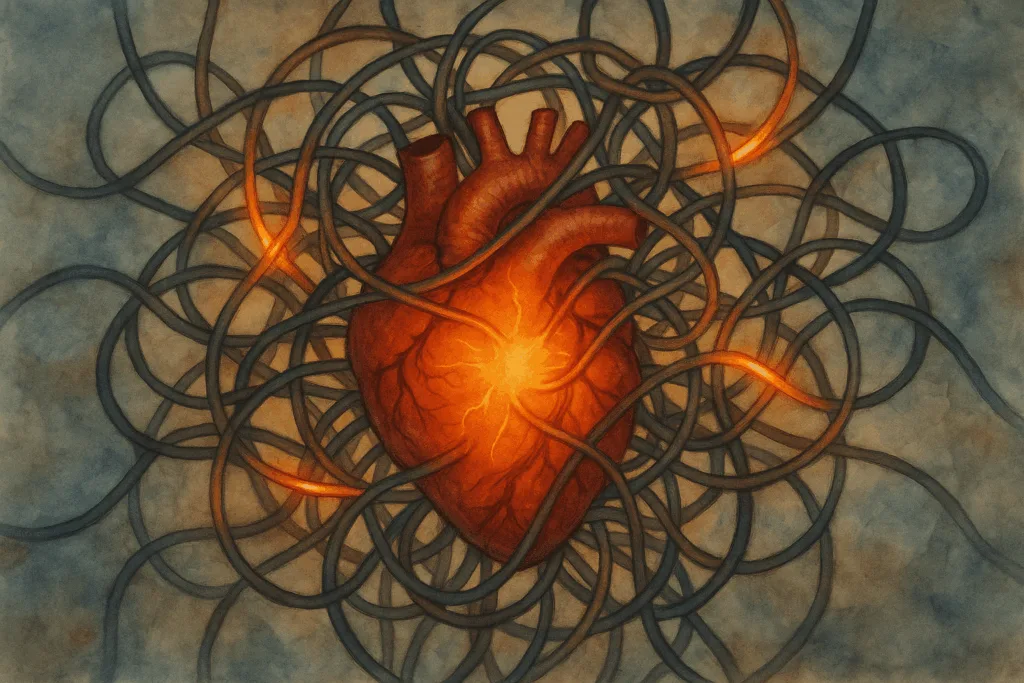
During two other experiences, I believed I was falling in love, but this time bipolar disorder had overridden my reason. My feelings were exceptionally strong, to the point of repeatedly telling those around me that “I had never been so in love with someone.”
I was thinking about this shared love; I was certain the woman in question only had eyes for me. I thought about her from morning to night and would have done anything for her. I believed she was sending me signs—signs I was the only one able to understand, since those around me were trying to discourage me. They were right.
Both times, I had been catapulted into severe manic episodes and then into psychosis. Each time, I felt twisted, like a snap. Psychosis, within mania, manifests through delusions and/or hallucinations. In my case, both occur. Here, these were so-called “erotomanic” delusions. They consist of the unfounded belief that someone is madly in love with you. The patient overinterprets or invents signs that only they can understand. Obviously, psychosis implies a loss of contact with reality, and therefore the inability to distinguish true from false. In my delusions, these two women had therefore fallen in love with me without any tangible evidence to support it.
This was accompanied by the emergence of feelings toward them that were extremely intense. In one case, I ended up acting in a somewhat inconsiderate way. The young woman nevertheless maintained contact with me, and we became close friends. The second was a colleague of mine and probably became frightened—for a reason I still do not know—but she created distance afterward. I imagine I must have come across as very intrusive. The context must be understood: I was fully convinced that she shared my feelings, without any evidence, which therefore pushed me to suggest outings very early, tease her, and make attempts at seduction—all of it in our workplace.
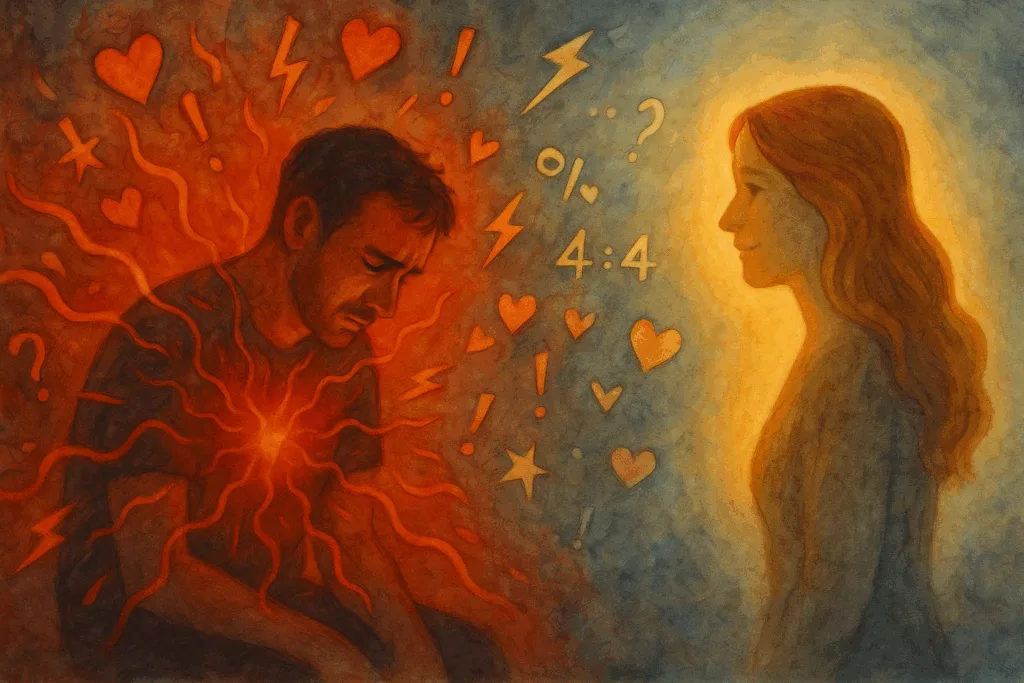
All these experiences shared one common point: they were tinged with mood instability, making my feelings more internally aggressive and more easily exposed in public. However, it is autism that manifests most clearly in this way of approaching romantic feelings.
Autism and romantic feelings
It plays a major role in the way I experience my romantic feelings. A very large role—perhaps even the only role. All the ways in which they express themselves are influenced by my ASD. In much the same way that autism is an integral part of my identity.
Unwavering loyalty
Some things persist, delusion or not, when I am in love—namely total devotion to the other person. I am unfailingly loyal, according to my friends. I will not hesitate to put the other person’s needs ahead of my own, even when the love is not reciprocated—which I usually learn too late. The person becomes an integral part of my mind. Since the barriers are broken, these are purely sensory fantasies that I experience (contact, hugs), which translate into scenes I visualize with an extreme degree of detail. Nothing particularly romantic, sensual, and even less sexual.
Theory of mind at the heart of my uncertainty
I analyze every message extensively; I sift through and dissect it in a very pattern-based and cold way before it becomes emotional. I therefore never let go the way many would like me to. It is rare for me to fully surrender to an emotion without going through this process.
This way of analyzing every message often generates either under-interpretation or over-interpretation. It is related to theory of mind and plunges me into strong uncertainty that can spill over into anxiety, which persists until these signals are clarified. I therefore had difficulty decoding others’ intentions—what is called theory of mind.
The sensory bubble as a romantic driver
For me, love is also born from a sensory experience shared with the other person. It does not arise from sexual desire but from shared tenderness. Hugs, sharing a bed, or even holding hands are all gestures and moments that can trigger the beginnings of romantic feelings. This is all the more true when they involve breaking my sensory and social barriers—something I only do with certain specific people. Only two friends can hug me without making me uncomfortable. The two women I fell in love with had managed to break down that barrier.
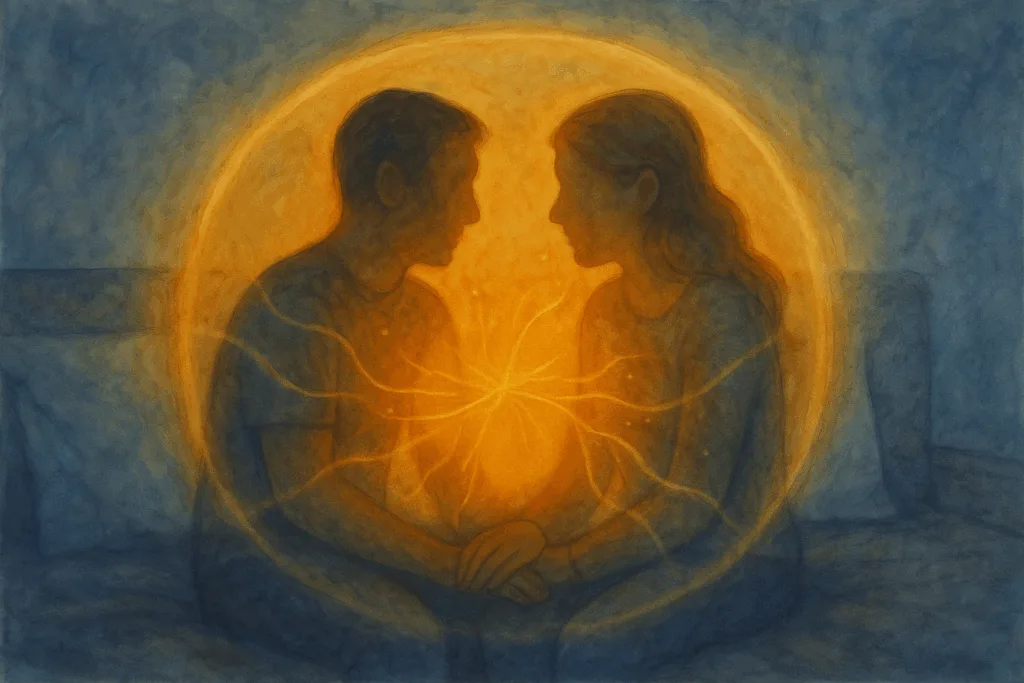
The other person’s scent, the body heat they give off, feeling their breathing or their heartbeat: all factors to which I am very sensitive and which can intensify feelings. These are also things I perceive with female friends, which is why it can be difficult for me to place my feelings until their reciprocity is confirmed.
This sensory seeking, this softness, is also what confused me the most: was it purely romantic, or simply a search for a sensory bubble with someone I fully trusted? For me, this sensory intimacy was stronger than a sexual bond. I even explained to a friend that I perceived a hug as more intimate than a kiss.
When love becomes a special interest
Each time I have been in love, I have almost turned the other person into a full-fledged special interest. I devoted all my time to her and all my thoughts were focused on her. She became an integral part of my daily life to the point of becoming extremely invasive. I had only one idea in mind: to make her my priority. It manifested as tenderness, small attentions, teasing, affection, and learning to know her, with her flaws. It was also always very clear-cut. Love was not gradual; there was a real shift in the way I saw her. I have read many testimonies in the autistic community mentioning these same particularities. Seeing love as a special interest also means accepting that romantic rejection can be extremely painful.
More intense romantic rejection
When an autistic person has a special interest, they devote a large part of their time to it until it becomes an identity parameter. Taking away their interest is like taking away a part of themselves. Romantic feelings are relatively similar: the fall is often more violent and longer than for allistic people. As an example, each romantic rejection has put me into “block mode” for about two years on average. It was so violent that my brain wanted to protect me from the slightest rejection and from any potential new loss of self-confidence.

I mentioned it: reduced theory of mind also affects romantic rejection. The autistic person may be convinced that the other shares their feelings and end up completely confused: there is a dissonance between their thoughts and reality, which they may experience very poorly.
Finally, as I described, being in love often implies a lowering of sensory barriers—something many autistic people only allow for certain specific individuals. It therefore involves giving one’s full trust to the person one is in love with. This is a rare and precious trust that can be perceived as a strong invalidation of the gift they are offering to the other.
A study has also examined the neural response to social rejection, identifying distinct brain response profiles to rejection and exclusion, indicating a more marked experience of social pain (Masten et al., 2011).
Why I refuse the game of seduction
Ultimately, since I do not play the social game of seduction—which I do not like at all—I rely on something clear, direct, and tangible. However, each time I have had these feelings, the signals on the other side were blurred, sometimes generating a strong dose of anxiety. Many other autistic people—including some of my friends—express this disinterest in the game of seduction. It is almost normal: it includes a lot of subtext and nonverbal communication, two aspects that can be difficult for us.
Unrequited love just as intense
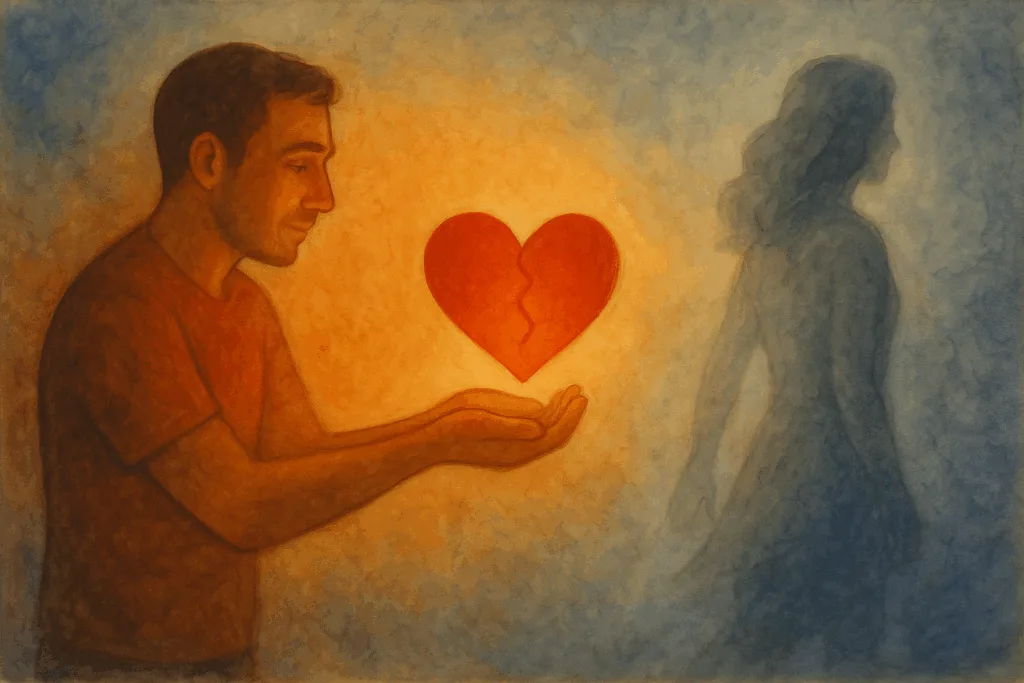
The friend who asked me how I saw being in love also once told me that I could not have known what it was because I had not experienced mutual love. He believed that one-sided love was weaker than when it was reciprocated. I disagree with that.
It is a very relational and social view of love. Yet the way it expresses itself in me can be just as overwhelming, structural, and destructive. Its very sensory nature alone gives it great strength. When I am in love, I am not seeking external validation; I am primarily seeking to share what I feel with the other person. It is like listening to music alone or with someone. The constant is the intensity. The variable is the echo.
Romantic failure, the birth of precious friendships
I keep in mind that experiencing mutual love (which is all I am waiting for) will probably bring me an alternative perspective. Perhaps. In the meantime, my first romantic feelings led to a deep friendship—now ended—and will therefore remain a very precious reference point in my mind.
Love, as I experience it, is neither butterflies nor social obviousness. It is a sensory intensity that floods me, a special interest that inhabits me. And if my experiences have not all been happy, they have taught me one thing: my way of loving is not defective. It is atypical—and it is in this singularity that it finds its strength.
Note: If the illustrations seem strangely metaphorical to you, that’s normal—I become lyrical when it comes to love. I hope they won’t make my autistic readers too confused!
Originally published in French on: 19 Oct 2025 — translated to English on: 02 Mar 2026.
 Jeanne Pons