
• Français
  • English
  • Autism

    Autistic Masking: When the Mask Leads to Burnout

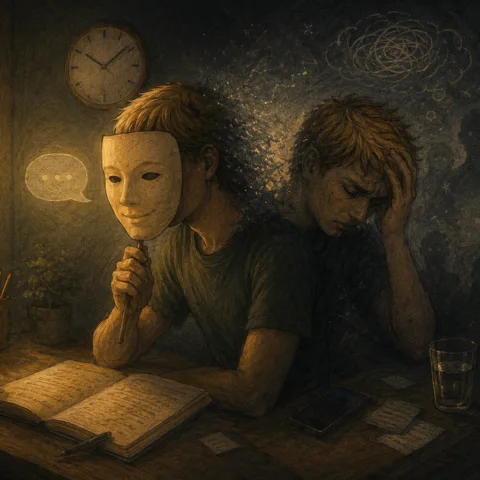
    Many autistic people spend years appearing to function normally in the eyes of others. Yet this apparent normality often relies on an invisible effort: autistic masking, also known as social camouflaging. This mask can sometimes help a person adapt more easily to the outside world, but it comes with an often underestimated cost: chronic fatigue, overload, and sometimes autistic burnout. In this article, I explain what masking really is, why it appears so early for some people, and how it can eventually become a trap.

    Autistic burnout or depression: how can you tell the difference?

    Many autistic people have experienced — or will experience — at least one autistic burnout in their lifetime. For many, it becomes a diagnostic turning point. Professionals, often poorly informed on the subject, frequently misdiagnose it as depression. To their credit, the phenomenon is widely known within the community but still remains poorly explored in the scientific literature. Yet autistic burnout is a very different syndrome from depression.

    Double-edged creativity: when autism and bipolar disorder intertwine

    This article follows the one describing graphorrhea. In August 2019, the manager of Nintendo-Master.com (which I had completely redesigned and then left five years earlier) calls me for help: the site is collapsing in terms of traffic, plagued by a whole range of bugs, and needs another overhaul. I have just been hospitalized for the first time and have developed a full manic episode. Out of love for the site, I jump at the opportunity: it’s time to put my skills to use again. En garde!

    Journey #3: The Diagnosis of Autism 

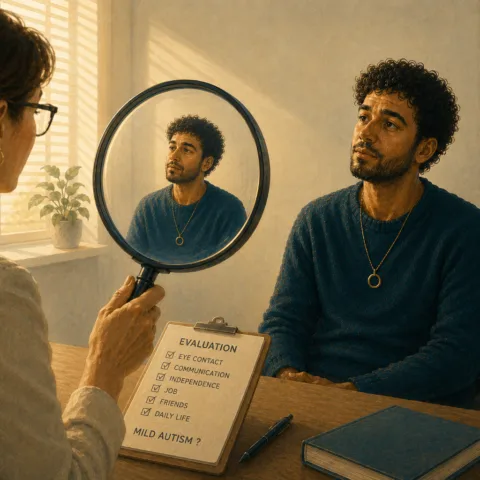
    My autism diagnostic journey began relatively early: the first atypical signs were spotted by my mother’s doctor when I was 18 months old. Apparently, I was sorting and organizing toys instead of playing with them in his waiting room. He then told my mother to keep an eye on me. And then… nothing for 20 years, before I received my bipolar diagnosis, was identified as very highly gifted thinking it explained my atypicalities, and finally discovered the missing piece — autism — at age 25.

    Journey #2: Identifying Giftedness

    “What do you think about the outcome of these tests?” the neuropsychologist in charge of my IQ assessment asked me. I will always remember that moment. At that instant, I hoped that identifying giftedness would be enough to rule out the bipolar cause. So I answered, naturally, that I suspected a confirmation of giftedness. I was right. I was formally identified as very highly gifted by a neuropsychologist… and I believed it would resolve all my difficulties.

    Early warning signs of autistic burnout

    Autistic burnout may seem to occur suddenly. However, it is often preceded by progressive signs. These signs resemble those of burnout once it is fully developed, but they appear more slowly and in a less intense way. They are mainly distinguished by their gradual onset and their milder expression compared to burnout when it becomes fully established. This topic is rarely discussed in the literature, even though it helps warn of an approaching autistic burnout.

    10 signs of autistic burnout

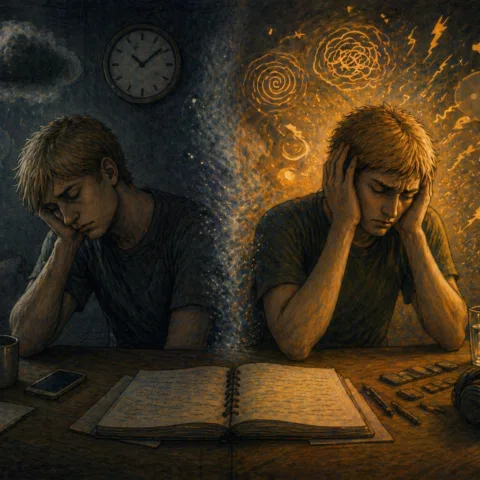
    Autistic burnout is a common syndrome experienced by many autistic people at least once in their lives. It often occurs after years of sensory overload and masking—that is, the constant effort to hide or compensate for autistic traits in order to meet social expectations. It manifests as extreme fatigue, but also through a range of cognitive, sensory, and emotional signs that distinguish it from depression or occupational burnout.

    When love becomes sensory overload

    A former friend once asked me how I perceived being in love. I replied that it was “a whole lot of unpleasant sensations in the body.” I had not yet been diagnosed, and it amused him a great deal. He had never heard that kind of description before, and my answer was instinctive. I myself think I had indeed never encountered this description elsewhere (I had even researched it thoroughly, like a diligent student, to break it down).