• Français
  • English
  • asd

    Double-edged creativity: when autism and bipolar disorder intertwine

    This article follows the one describing graphorrhea. In August 2019, the manager of Nintendo-Master.com (which I had completely redesigned and then left five years earlier) calls me for help: the site is collapsing in terms of traffic, plagued by a whole range of bugs, and needs another overhaul. I have just been hospitalized for the first time and have developed a full manic episode. Out of love for the site, I jump at the opportunity: it’s time to put my skills to use again. En garde!

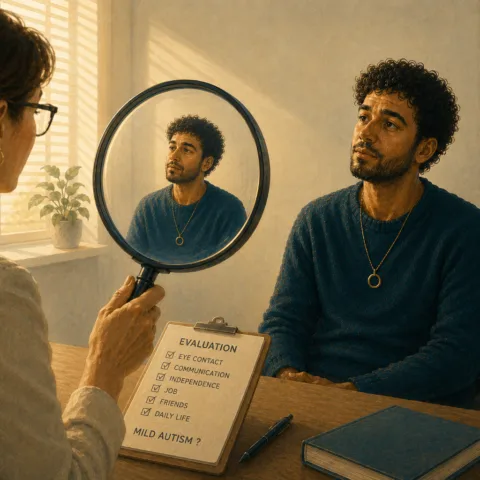
    Journey #3: The Diagnosis of Autism 

    My autism diagnostic journey began relatively early: the first atypical signs were spotted by my mother’s doctor when I was 18 months old. Apparently, I was sorting and organizing toys instead of playing with them in his waiting room. He then told my mother to keep an eye on me. And then… nothing for 20 years, before I received my bipolar diagnosis, was identified as very highly gifted thinking it explained my atypicalities, and finally discovered the missing piece — autism — at age 25.

    Journey #2: Identifying Giftedness

    “What do you think about the outcome of these tests?” the neuropsychologist in charge of my IQ assessment asked me. I will always remember that moment. At that instant, I hoped that identifying giftedness would be enough to rule out the bipolar cause. So I answered, naturally, that I suspected a confirmation of giftedness. I was right. I was formally identified as very highly gifted by a neuropsychologist… and I believed it would resolve all my difficulties.

    When love becomes sensory overload

    A former friend once asked me how I perceived being in love. I replied that it was “a whole lot of unpleasant sensations in the body.” I had not yet been diagnosed, and it amused him a great deal. He had never heard that kind of description before, and my answer was instinctive. I myself think I had indeed never encountered this description elsewhere (I had even researched it thoroughly, like a diligent student, to break it down).

    Autism: Understanding and living as an autistic person

    Autism is often misunderstood. It is reduced to a few stereotypes, whereas in reality it is a neurodevelopmental condition that affects communication, social interactions, and sensory perception. Autism is a spectrum, grouped since 2013 under the term Autism Spectrum Disorder (ASD). It manifests very differently from one person to another. Before exploring its nuances, it is necessary to go back to what autism really is.

    Pause — Autisticisms #2: Cinema & Absurd Rigor

    A short Autisticism pause to evoke this time a rocambolesque situation linked to my rigidity regarding rules—especially those in movie theaters—which are nevertheless displayed in huge letters with icons on a blue background in the UGC cinemas I go to, just before the film starts. Namely: avoid talking during the film, put your phone in airplane mode. For some people, these rules are apparently mere suggestions. Some of them did not see the scene I’m about to recount coming.

    Hypomania: Symptoms, Lived Experience, and Interactions with Autism

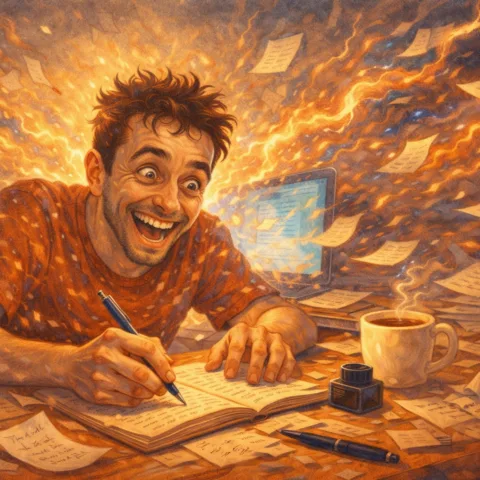
    To begin my series of articles on bipolar disorder episodes, I thought about presenting them to you in chronological order, reflecting their cycle. Hypomania is the first euphoric (or irritable) phase of this condition. It sometimes progresses either into mania (in bipolar disorder type I) or into depression. Hypomania — which can manifest in two drastically different ways — is what we’ll focus on in this article. I’ve experienced a large number of hypomanic episodes that turned me into a production machine, a walking factory.

    Pause — Autisticisms #1: Punctuality & Idioms

    Over the years, I’ve collected a whole range of quirks — the kind that never show up in diagnostic manuals, yet quietly shape my everyday life. They’ve become part of how I make sense of my autism, and in a way, they’ve even helped confirm that the diagnosis fits. So here starts this series: small autistic misadventures, sometimes ridiculous, sometimes funny, always distinctly mine. I call them my autisticisms — a word I came up with to name these wonderfully awkward, unmistakably autistic oddities… the ones that make me smile (and occasionally other people too).

    Autism and bipolar disorder: a dual experience that is common yet largely understudied

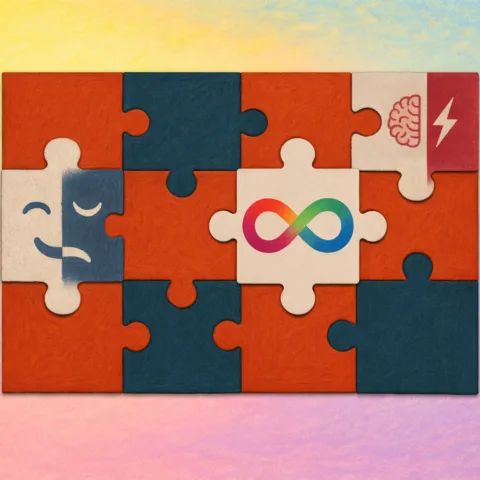
    5 to 8% of autistic people are believed to be affected by bipolar disorder, and yet, this association between the two conditions is rarely mentioned in the literature. When you type “autism and bipolar disorder” into Google, finding a personal account can feel like a challenge. A few years ago, I took part in a podcast on this topic, sharing an experience that was almost unique—especially in France. The idea of a blog exploring both subjects in detail slowly began to form a few weeks ago. A few days later, the project was underway.