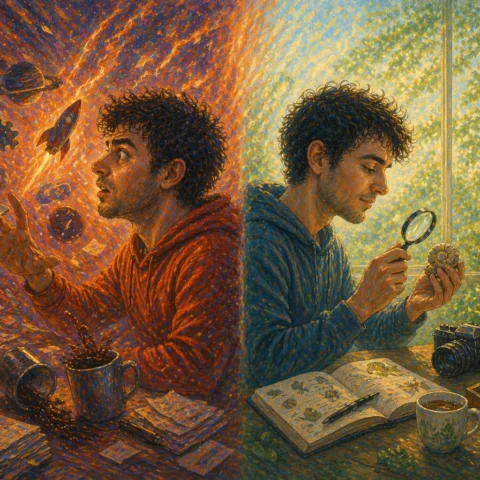
What is the difference between a manic obsession and an autistic special interest? On paper, the distinction seems simple. In reality, it is not at all. This confusion is common, including between bipolar disorder and autism (ASD), even among healthcare professionals. I have experienced it myself from the inside.
A former friend once asked me how I perceived being in love. I replied that it was “a whole lot of unpleasant sensations in the body.” I had not yet been diagnosed, and it amused him a great deal. He had never heard that kind of description before, and my answer was instinctive. I myself think I had indeed never encountered this description elsewhere (I had even researched it thoroughly, like a diligent student, to break it down).
Rapid cycling in bipolar disorder remained a blind spot for me for a long time. Yet the signs had been there all along. I wrote many of the articles on this blog within just a few days. A month earlier, I had written two books in less than two weeks. Before that, in March 2025, I went through an especially stimulating period during which I was socializing from morning until night. In January, the same pattern had already occurred. The common thread? Each time, it started with a hypomanic episode that eventually progressed into a manic episode. In September 2025, my psychiatrist confirmed that my bipolar disorder had entered a rapid-cycling pattern. That was when I realized how little I actually knew about this form of bipolar disorder, despite it being associated with a more severe course and often a more challenging treatment.