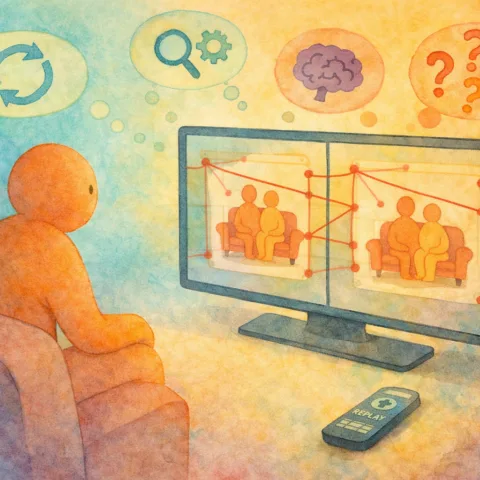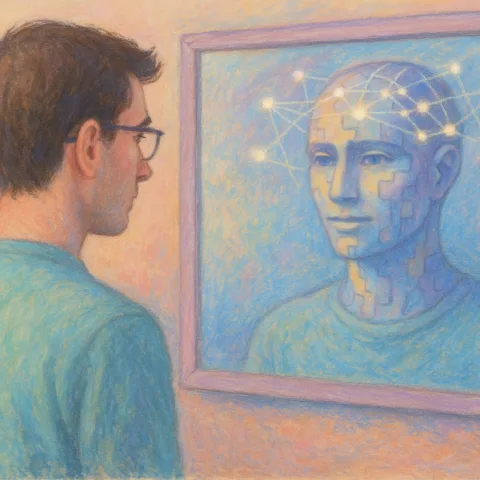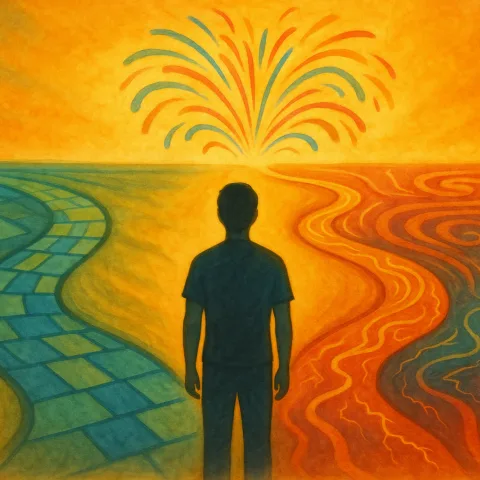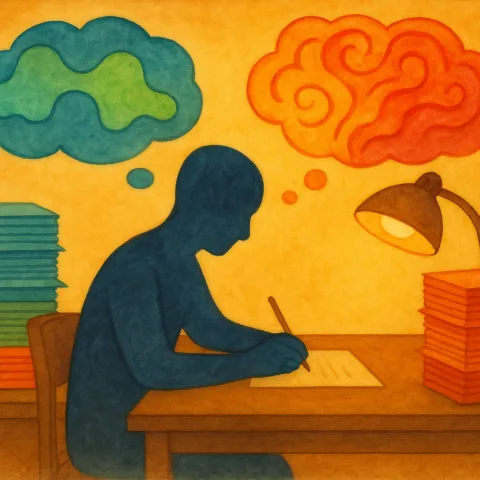
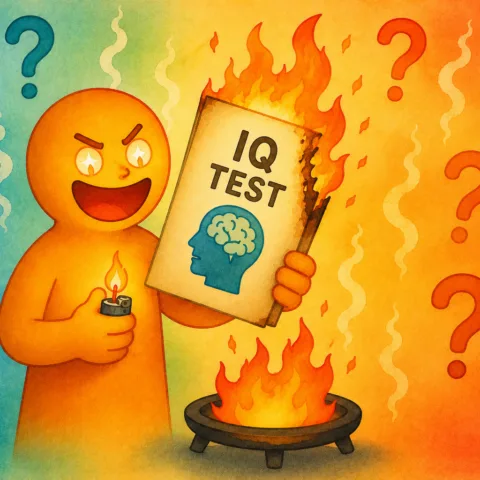
Many autistic people have a strong ability for pattern recognition. In 2025, I realized that I primarily think this way. This pattern-based thinking is formidable. Sometimes even… too much. The Autisticism that follows is a perfect example.
For about a year now, ever since I started using GPT, I’ve received various criticisms about my mentions of AI. They are varied: some question the way I use it to bring my imagination to life in my illustrations; others comment on the “psychological” feedback from GPT that I quote; and still others question its role as a proofreader. The topic is timely, so I thought I would clarify a few of these points.
After my accounts of bipolar episodes, I thought I would introduce a brief breathing space before continuing my content about my conditions. A moment I repeat every morning, which awakens my senses and gives me the energy I need to navigate a world designed for allistics. It is the very first thing I do when I get up. I did it every morning for 12 years before a depressive episode managed to sweep away a moment that was nonetheless so precious and simple. And then, naturally, it came back.
It is well known to almost all people with bipolar disorder, some experiencing it far more often than their (hypo)manic episodes and very often for much longer. While a hypomanic episode may last only a few days, depression can last for months. I discuss it in detail in a dedicated article. I have experienced it an incalculable number of times, notably due to the rapid-cycling nature of my bipolar disorder, and I present here the account of one of them.
Less discussed in the literature yet experienced by 40% of bipolar individuals at least once in their lives, the mixed episode can sometimes appear without warning but often between a manic episode and a depressive episode. I discussed in a dedicated article how this episode presents both (hypo)manic and depressive characteristics. Here, I recount my experience of a mixed episode that was devastating.
A brief breather between two serious articles. Here is an ironic guide based on my latest trip, where I observed how one can travel abroad… without ever really encountering the country.
My trip to Cambodia has come to an end. I was there with a small group of very good friends. I had gone for immersion, for the journey more than for the vacation. We obviously didn’t all share that vision. There were some frictions, and I ended up listing everything I was observing around me. So I put together a survival guide for you to never experience Cambodian reality while in the country, and to keep enjoying a dream trip by living everywhere with five times the local standard of living. Buckle up — it’s sometimes more subtle than it seems.
Mania may seem seductive, but it destroys (even neurons). After detailing manic episodes in bipolar disorder, and in order to illustrate them, I chose to describe one as I experience it. My goal is to show its raw reality. When I take a manic turn, my brain functions like a program whose objective is to destroy its host.
Following my articles on episodes of bipolar disorder, it is time to illustrate them with a vivid and raw narrative. This article will be the first in a chronological series recounting my lived experience of the bipolar cycles that haunt my life. Hypomania may seem appealing, but it represents my first danger. It makes me productive, yet it is also the earliest warning sign. Because hypomania often gives rise to a succession of phases leading to an almost inevitable final crash.
A short Autisticism pause to evoke this time a rocambolesque situation linked to my rigidity regarding rules—especially those in movie theaters—which are nevertheless displayed in huge letters with icons on a blue background in the UGC cinemas I go to, just before the film starts. Namely: avoid talking during the film, put your phone in airplane mode. For some people, these rules are apparently mere suggestions. Some of them did not see the scene I’m about to recount coming.
It’s now been two weeks since I came back from my trip to Cambodia with my group of friends. In the previous installment, I slightly veered off course, diving into social reflections sparked by a healthy dose of well-timed (or poorly timed) humor. All of it stemmed from one simple context: a trip that left almost no room for privacy. We did everything together. Today, it’s time to take a step back and look at this strange, chaotic, unforgettable vacation.