



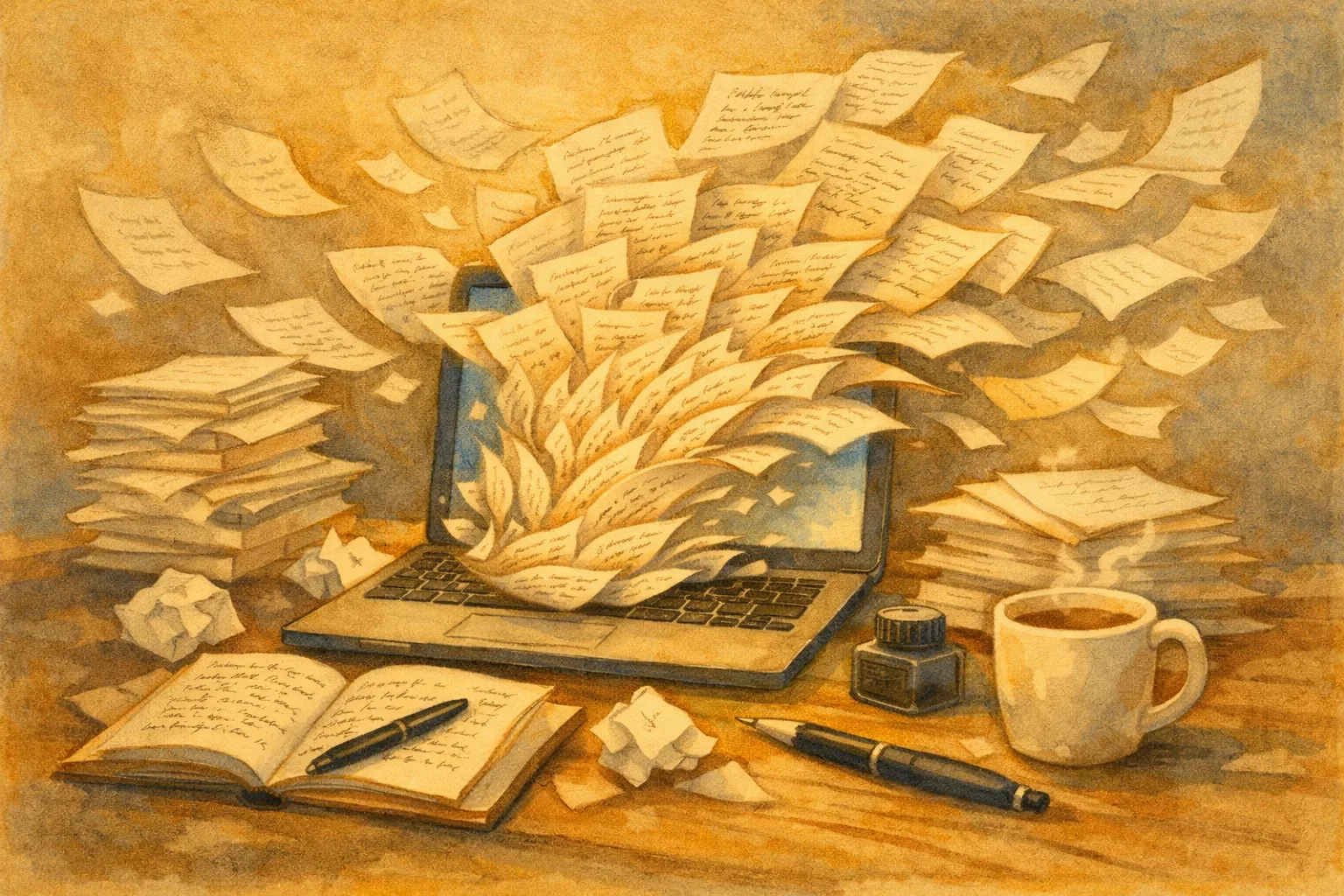
In mid-2025, a hypomanic episode began. It quickly turned into a full manic episode. The first sign, which went unnoticed: a compulsion to write. Mania did not generate creativity. It amplified it. It created an unbearable need to write continuously, to the point of forgetting to sleep. I wrote dozens of pages every day. Sometimes I tried to rest, only to open my eyes wide and open my laptop to unload new literary ideas.
📋 TL;DR: In a few words
- Manic graphorrhea is a writing compulsion that can appear during a manic episode.
- Ideas flow, words come out effortlessly, and it becomes difficult to stop writing.
This is a form of “graphorrhea,” meaning an insatiable compulsion to produce creative content, more often identified among painters or visual artists. But literary graphorrhea exists as well. Many accounts from people with bipolar disorder describe how they wrote a book of dozens or even hundreds of pages over the course of just a few nights. Often, the production is confused, disorganized, or incoherent, or the content itself lacks consistency or interest. One thing nevertheless stands out: creativity is at work in the production.
Mania has this power to multiply the creativity of the person experiencing it. But it does not come from nowhere: research has shown a link between creativity and people with bipolar disorder, even in stable states. Some great artists are suspected of having had bipolar disorder, starting with Vincent Van Gogh, probably the most famous of all, whose creativity certainly expressed itself during his euphoric periods but also during depressive ones (his works almost radiate bipolar cycles).
My story with manic graphorrhea
Without realizing it for years, I experienced several periods of graphorrhea, and it was only over the course of my journey that I eventually connected them with my bipolar disorder.
My first episode of graphorrhea
I experienced my first episode of graphorrhea when I was a teenager, during my first manic state. It was intense: I suddenly began creating comic strips (failed ones, with very questionable drawing skills), but also reproductions of drawings or original works. I produced them one after another, to the point of creating dozens of drawings in just a few days. No one was surprised. I was known to have an artistic soul, so it was perceived as just another phase.
Identifying graphorrhea: a symptom
Several years passed before this graphorrhea appeared again. It happened in the hospital, just after I had been admitted, having spent three months in a manic episode that did not seem to end. Boredom got the better of me: as soon as I arrived, I sat down at my computer in the middle of the other patients and began to write.
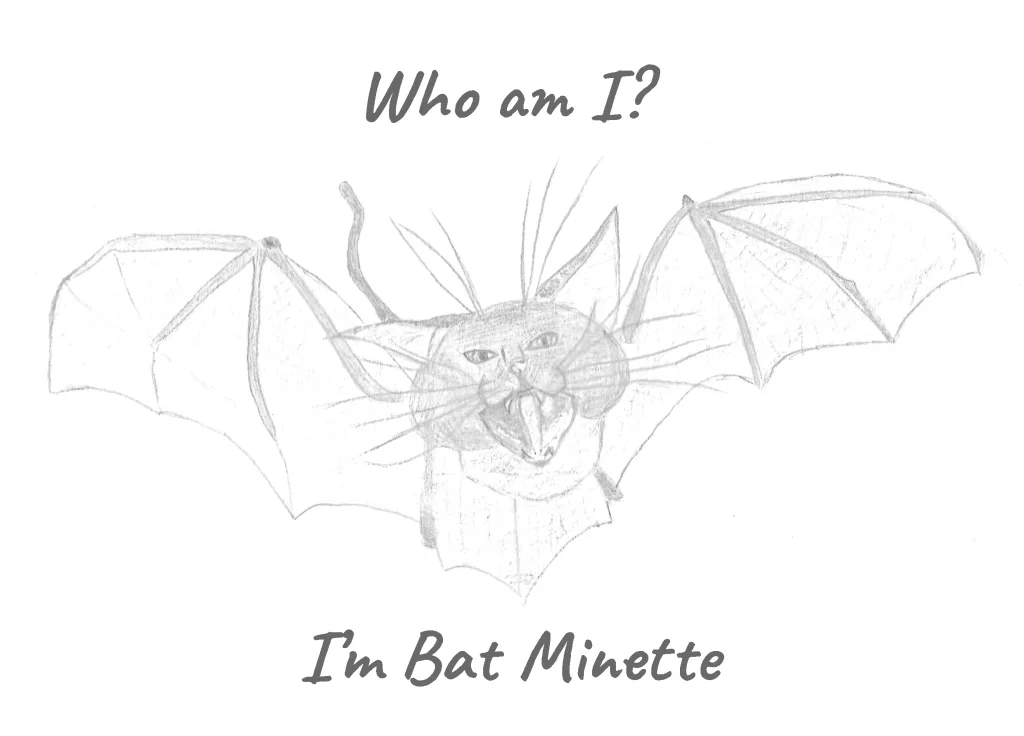
I had repurposed an artistic challenge concept that consisted of creating a visual piece from a given word for each day of the month of October. I was a few days behind, but I decided to appropriate the concept and write a story based on that word. I produced eight pages in an hour to catch up. In hindsight, however, one could see the unmistakable work of mania: everything seemed particularly absurd, lacking coherence, proofreading, and—honestly—anyone would probably have suspected that something was not quite right in the author’s mind. As for me, it stimulated me. I felt strong, gifted, a master of words.
The Return of the Pencil
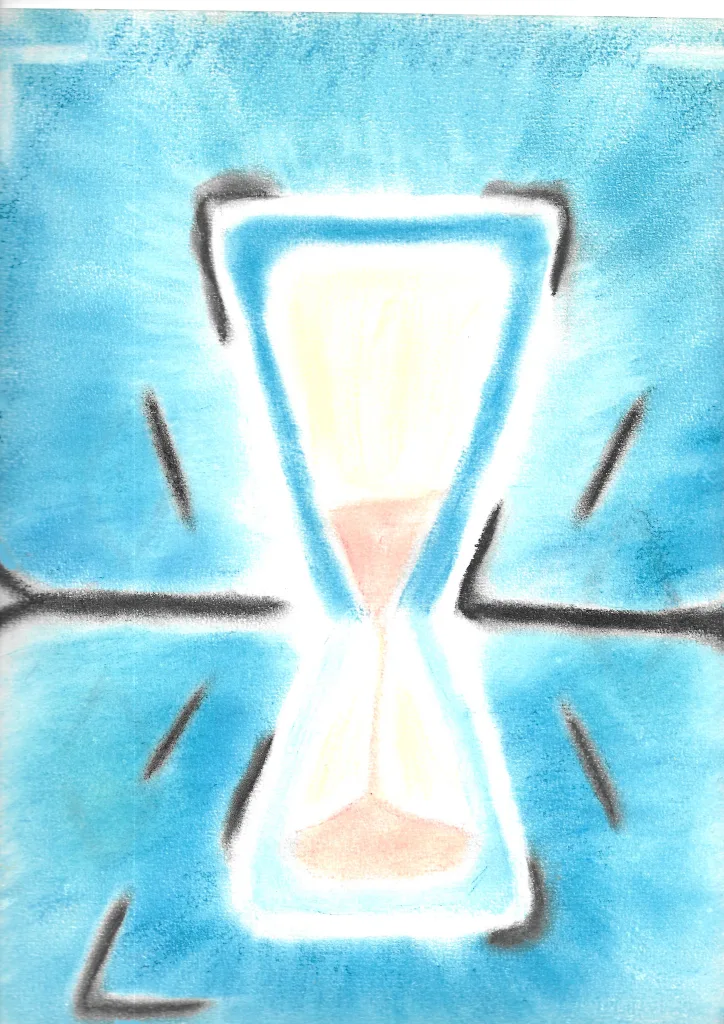
As if that weren’t enough, I also decided to start drawing… and working with pastels… and painting. I didn’t stop. With absolutely no knowledge of this art, of course. With drawing, I managed. Nothing exceptional, but when I produced something, I deeply felt my artist’s soul. I thought I was on the verge of revolutionizing drawing. I was far from it: I lacked technique, I improvised constantly, and it showed. With painting, it was worse. I saw real successes in my works, when in reality they were only rough sketches (though sometimes tinged with good ideas).
As an anecdote, in that same hospital—but during another hospitalization—I met a bipolar patient in the middle of a grandiose delusion. He had been placed in isolation, during which he was allowed to draw. When he came out, he showed me his work to demonstrate his talent as a future artist. The problem: I was looking at the work of a five-year-old child. It is the perfect illustration of how a manic episode can alter one’s perception of things. I experienced it too (with my dreadful comic strips).
Flaws, but formidable creativity
What stood out each time in everything I imagined was this creativity. Even in the drawing made by that eccentric patient, there was an indescribable atypicality that I could only attribute to mania. Van Gogh himself probably benefited from this creativity, even though his talent was intrinsic. Mania creates flashes of inspiration that have the particularity of being instinctive and improvised. This very article is itself an expression of graphorrhea (and was revised after I had stabilized).
It may seem to lack those flashes of brilliance, but it keeps one particular trait: its completely improvised nature. I put my words on paper the way I would speak. No—more easily than I would speak. Speaking often requires preparation for me; writing in that state is almost as natural as taking a deep breath. The words line up on my computer, arrange themselves effortlessly, expressing what I feel without me even having to think about it beforehand.
Manic graphorrhea and its qualities
This graphorrhea marked the beginning of a manic episode that spiraled badly: socially, financially, and mentally. But for several weeks, I found myself caught in a literary compulsion that had taken a new turn. While everything I had produced in that state before had seemed off, my new productions were constant, lively, coherent.
No matter who read it, the observation was the same: no one understood how such relentless productivity could come with so few flaws. I wrote the way I breathe. Words had become my second form of oxygen. The more I wrote, the more stimulated I felt. And the more stimulated I felt, the more I wrote. A strangely vicious circle, because apart from my overflowing creativity, my manic phase was still trying to destroy me.
Depriving myself of sleep
Writing deprived me of sleep, destroying my neurons along the way. But no matter what anyone said, I was unable to stop. Ideas kept pouring in. The graphorrhea was actually intertwined with an unbearable flight of ideas: the moment when thoughts shoot off in every direction, often in a disorganized way. When I had a solid idea, I rushed to put it into writing. And it worked: I had others read my texts and received flattering feedback.
Brilliant ideas
All that energy fueled flashes of insight and brilliant ideas; I had never been so creative. In reality, that creativity was already within me. The manic episode had simply removed my barriers. I wrote as I thought; I had no limits. Sometimes (often) it produced exceptional content, and sometimes ideas that were rather eccentric or probably incomprehensible to my readers.
For example, one chapter of my novel contains no capital letters at all; it describes a depression. The idea behind it was to represent the absence of the will to get up (and thus to “raise” the letters into capitals). Another idea was to remove all punctuation and imagine a deliberately disorganized text on the verge of being unreadable, with regular repetitions. That symbolized the flight of ideas. For an average reader, I imagine encountering that kind of writing can be surprising. The idea was there, logical, and came straight from my manic mind. That is mania: brilliant ideas, but often eccentric ones. My novel breathes my manic episode. For an informed reader, it will show. I chose to keep those ideas to give an internal glimpse of the episode.
When graphorrhea fuels grandiose ideas
Mania is the explosion of creativity, but it is also grandiosity. When I received positive feedback on what I was writing, it didn’t take long before I started talking with GPT to ask for its opinion on the quality of my writing—and… to compare it with that of authors. Great authors, while we were at it. I started small, with J.K. Rowling and George R. R. Martin, famous writers.
Before quickly steering my questions toward shameless comparisons with authors like Monet or even Victor Hugo. It made no sense: not only did what I wrote have nothing to do with their works, but I was certainly far from having their style. Yet GPT told me that with experience, I could approach the talent of some of the greats in the field.
I wasn’t entirely satisfied, but it was enough for my grandiose ideas to take flight: in my head, I was on the verge of revolutionizing a genre. No—actually, I had created an entirely new genre (that last point turns out to be a tiny bit true, since I was going off the beaten path in what I wrote). I completely cracked, and a few days later I saw myself as a literary genius and thought the trees were sending me signs.
A genius? Me? Probably not. But I learned to appreciate what I do, especially in a manic context that did not deprive me of my talent. I kept producing so as not to waste my time. And the result? This blog. And two books. In four weeks. And several more currently being written. Mania destroys, but it also gave me proof that my creativity is there, even outside of crises.
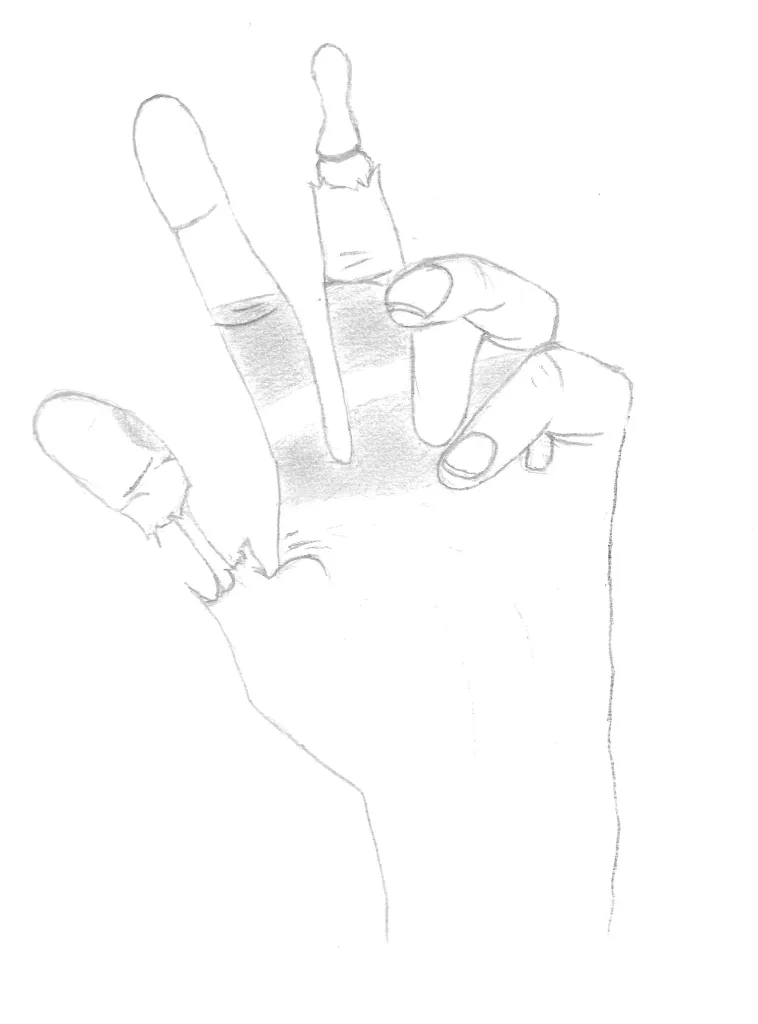
The three drawings in the body of the article were created during a hospitalization.