



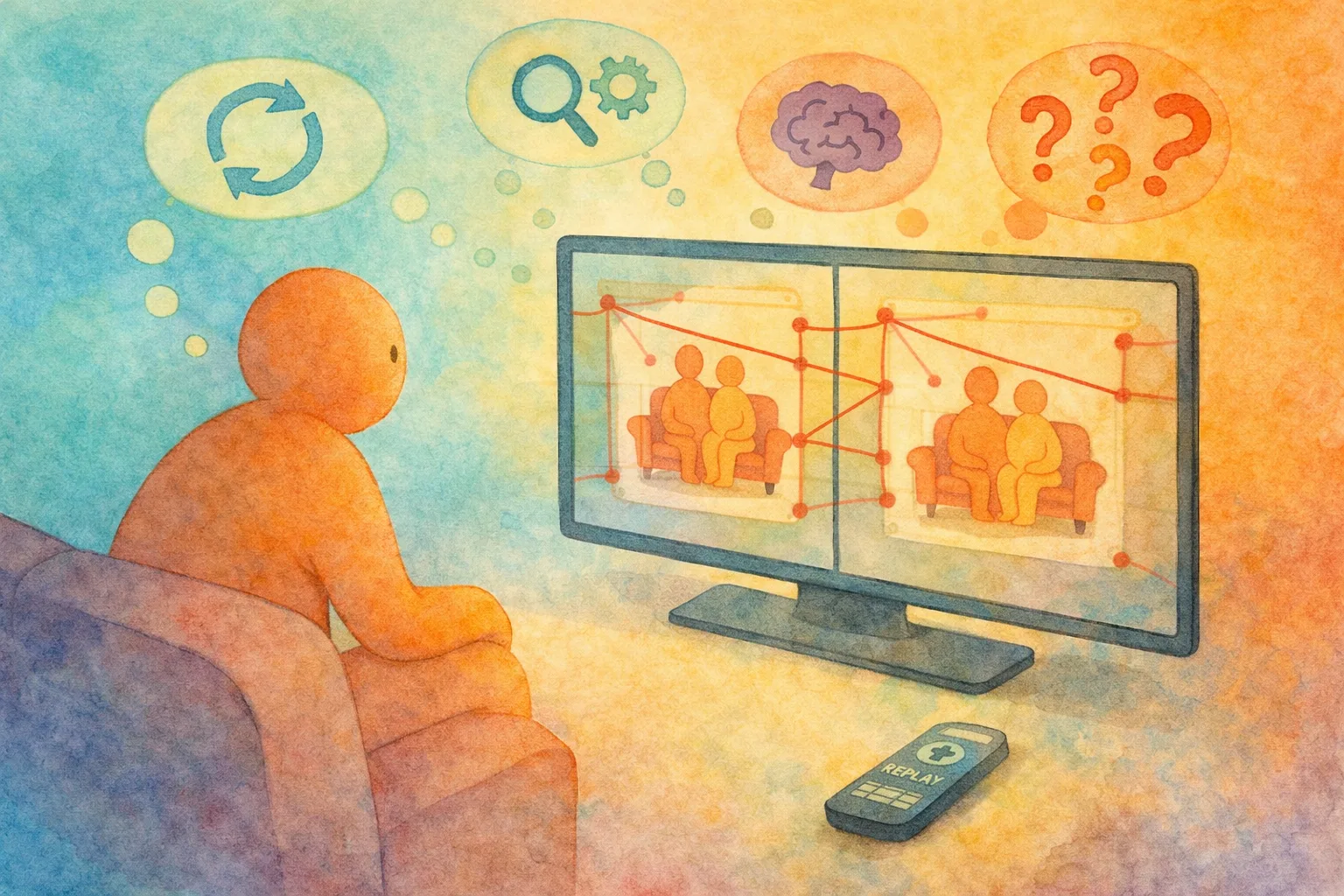
Many autistic people have a strong ability for pattern recognition. In 2025, I realized that I primarily think this way.
This pattern-based thinking is formidable.
Sometimes even… too much. The Autisticism that follows is a perfect example.
In 2017, Netflix released season 4 of Black Mirror. There are four of us, with friends, watching a few episodes.
We start with the episode Arkangel. Great episode.
It comes to an end.
We start the next one.
Quickly, my pattern-based thinking kicks in: I notice similarities in the episode, as some scenes seem identical.
I share the idea.
Everyone agrees: the showrunners seem to be playing with our brains by offering something similar, yet slightly different.
We spot a few details here and there that distinguish the two episodes, but it remains relatively minimal.
The episode goes on and confuses us even more.
“This is another trick by the producers to create doubt and mess with the audience by making an episode almost identical to the previous one.”
“There’s probably going to be a twist soon,” we tell ourselves.
We’re fascinated by what’s happening, but also quite lost.
I keep trying to figure out the director’s intention behind what I’m seeing on screen.
After 30 minutes, it’s certain: they must have been high.
The episode ends when someone finally picks up the remote.
We realize we had restarted the same episode.
Makes you wonder who was actually high.
Long live my pattern recognition.