
• Français
  • English
  • autistic burnout

    Autistic Masking: When the Mask Leads to Burnout

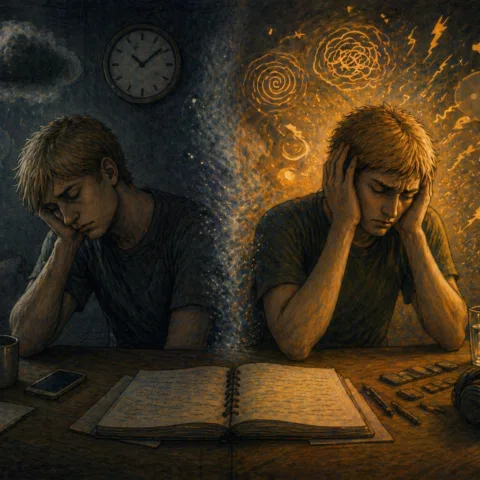
    Many autistic people spend years appearing to function normally in the eyes of others. Yet this apparent normality often relies on an invisible effort: autistic masking, also known as social camouflaging. This mask can sometimes help a person adapt more easily to the outside world, but it comes with an often underestimated cost: chronic fatigue, overload, and sometimes autistic burnout. In this article, I explain what masking really is, why it appears so early for some people, and how it can eventually become a trap.

    Autistic burnout or depression: how can you tell the difference?

    Many autistic people have experienced — or will experience — at least one autistic burnout in their lifetime. For many, it becomes a diagnostic turning point. Professionals, often poorly informed on the subject, frequently misdiagnose it as depression. To their credit, the phenomenon is widely known within the community but still remains poorly explored in the scientific literature. Yet autistic burnout is a very different syndrome from depression.

    Early warning signs of autistic burnout

    Autistic burnout may seem to occur suddenly. However, it is often preceded by progressive signs. These signs resemble those of burnout once it is fully developed, but they appear more slowly and in a less intense way. They are mainly distinguished by their gradual onset and their milder expression compared to burnout when it becomes fully established. This topic is rarely discussed in the literature, even though it helps warn of an approaching autistic burnout.

    10 signs of autistic burnout

    Autistic burnout is a common syndrome experienced by many autistic people at least once in their lives. It often occurs after years of sensory overload and masking—that is, the constant effort to hide or compensate for autistic traits in order to meet social expectations. It manifests as extreme fatigue, but also through a range of cognitive, sensory, and emotional signs that distinguish it from depression or occupational burnout.