

diagnosis

I’m autistic, I have bipolar disorder: why the words matter

No Comments

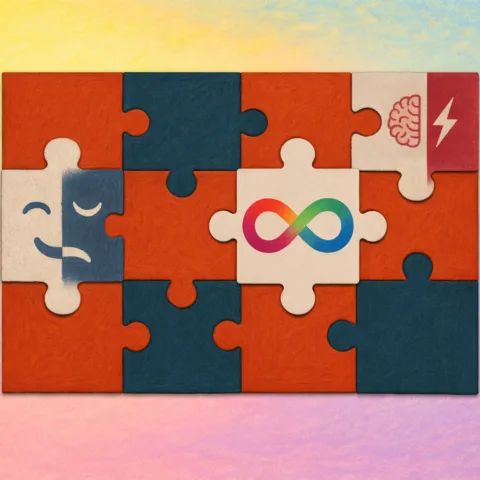
Should you say “I’m autistic” or “I have autism spectrum disorder”? And should you say “I’m bipolar” or “I have bipolar disorder”? These questions regularly spark debate. Yet over the years, the way I talk about both has changed completely. It evolved alongside the way I came to see them. For years, I said I was bipolar. Today, I say I have bipolar disorder. A subtle but important difference. Likewise, I rarely say I have autism spectrum disorder (ASD). I’m autistic. Another subtle distinction. Behind these different ways of speaking lies a fundamentally different way of viewing two realities: a psychiatric illness and a neurodevelopmental condition. For me, this shift happened gradually and almost naturally.
Journey #3: the diagnosis of autism

No Comments

My autism diagnostic journey began relatively early: the first atypical signs were spotted by my mother’s doctor when I was 18 months old. Apparently, I was sorting and organizing toys instead of playing with them in his waiting room. He then told my mother to keep an eye on me. And then… nothing for 20 years, before I received my bipolar diagnosis, was identified as very highly gifted thinking it explained my atypicalities, and finally discovered the missing piece — autism — at age 25.

Journey #1: the diagnosis of bipolar disorder

No Comments

My diagnostic journey began at 21. Well, technically, I saw a psychologist when I was 6. After only a few sessions studying me, she concluded that nothing could be done with me and the follow-up stopped. Stellar professional work, you might say (sarcasm). I still remember refusing to follow her instructions because they seemed absurd to me. At 16 and a half, I gradually developed grandiose ideas, I chained projects together, I drew, I wrote, my grades dropped. That turned out to be my first manic episode, sprinkled with a touch of psychosis. It was also the beginning of a long epic.