Hypomania: symptoms, lived experience, and interactions with autism
To begin my series of articles on bipolar disorder episodes, I thought about presenting them to you in chronological order,…



Chronicles of an Atypical Mind — Unfiltered and Unapologetic
Personal stories, science-based articles, and resources on autism, bipolar disorder, and atypical cognition.
To begin my series of articles on bipolar disorder episodes, I thought about presenting them to you in chronological order,…

A former friend once asked me how I perceived being in love. I replied that it was “a whole lot…
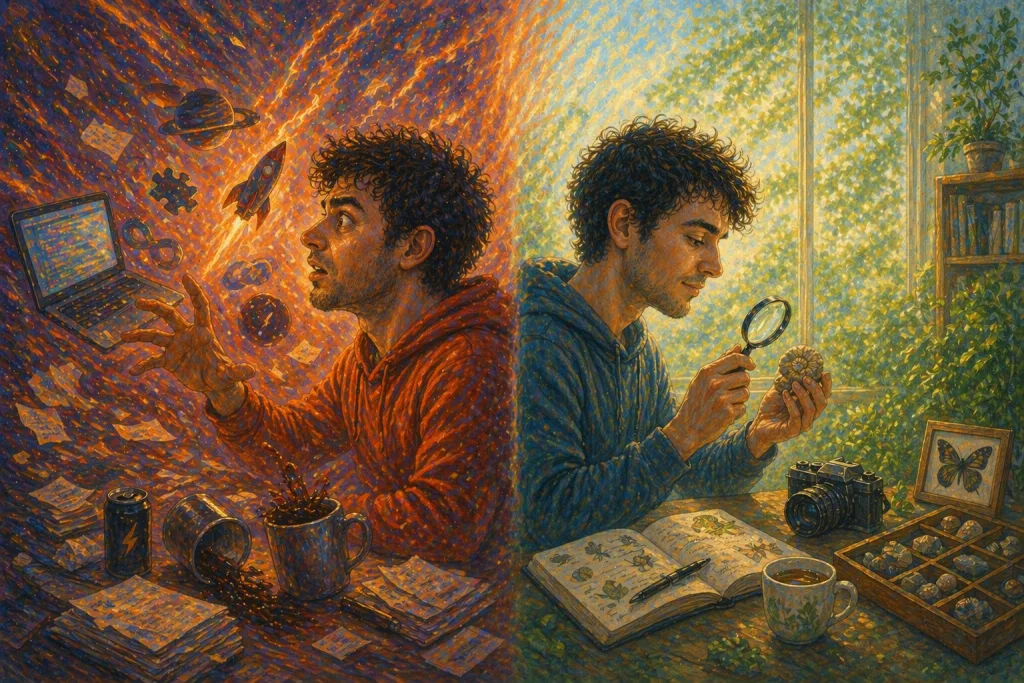
What is the difference between a manic obsession and an autistic special interest? On paper, the distinction seems simple. In…
Choose a path to dive deeper into the topics that concern you.

Manic graphorrhea is a compulsion to write that can occur during a manic or hypomanic episode to someone affected by bipolar disorder. Thoughts flow so quickly that it can become difficult, or even impossible, to stop writing. For some people with bipolar disorder, this acceleration of thought turns writing into an almost vital need. I know that feeling well: during my manic episodes, I sometimes felt as though I was writing as naturally as I was breathing.
For about a year now, ever since I started using GPT, I’ve received various criticisms about my mentions of AI. They are varied: some question the way I use it to bring my imagination to life in my illustrations; others comment on the “psychological” feedback from GPT that I quote; and still others question its role as a proofreader. The topic is timely, so I thought I would clarify a few of these points.
My diagnostic journey began at 21. Well, technically, I saw a psychologist when I was 6. After only a few sessions studying me, she concluded that nothing could be done with me and the follow-up stopped. Stellar professional work, you might say (sarcasm). I still remember refusing to follow her instructions because they seemed absurd to me. At 16 and a half, I gradually developed grandiose ideas, I chained projects together, I drew, I wrote, my grades dropped. That turned out to be my first manic episode, sprinkled with a touch of psychosis. It was also the beginning of a long epic.
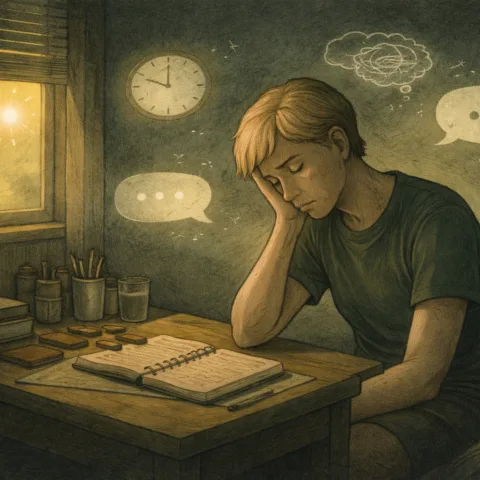
Autistic burnout is a common syndrome experienced by many autistic people at least once in their lives. It often occurs after years of sensory overload and masking—that is, the constant effort to hide or compensate for autistic traits in order to meet social expectations. It manifests as extreme fatigue, but also through a range of cognitive, sensory, and emotional signs that distinguish it from depression or occupational burnout.

A former friend once asked me how I perceived being in love. I replied that it was “a whole lot of unpleasant sensations in the body.” I had not yet been diagnosed, and it amused him a great deal. He had never heard that kind of description before, and my answer was instinctive. I myself think I had indeed never encountered this description elsewhere (I had even researched it thoroughly, like a diligent student, to break it down).

After my accounts of bipolar episodes, I thought I would introduce a brief breathing space before continuing my content about my conditions. A moment I repeat every morning, which awakens my senses and gives me the energy I need to navigate a world designed for allistics. It is the very first thing I do when I get up. I did it every morning for 12 years before a depressive episode managed to sweep away a moment that was nonetheless so precious and simple. And then, naturally, it came back.
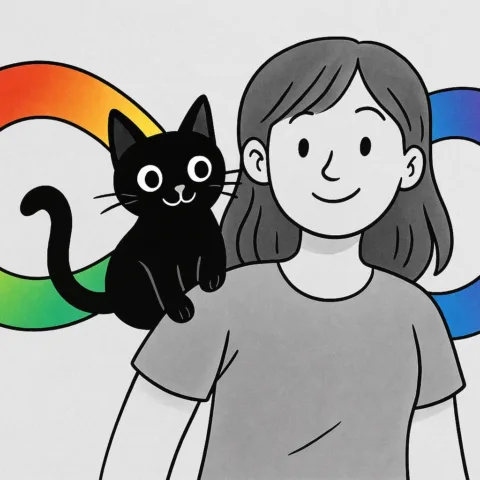
Today I’m introducing the “Crossed Spectra” category. The goal: to give the floor to other people concerned. Spectrum & Cycles is not meant only to let me tell my whole life story, but also to share other experiences, just as embodied, raw, and unfiltered. I therefore invited my friend Jeanne to speak and explain in detail what autism in women looks like and to share her lived experience. (And I disclaim all responsibility for her touches of humor in the titles — I did ask her to include some!)

Autism is often misunderstood. It is reduced to a few stereotypes, whereas in reality it is a neurodevelopmental condition that affects communication, social interactions, and sensory perception. Autism is a spectrum, grouped since 2013 under the term Autism Spectrum Disorder (ASD). It manifests very differently from one person to another. Before exploring its nuances, it is necessary to go back to what autism really is.
It is well known to almost all people with bipolar disorder, some experiencing it far more often than their (hypo)manic episodes and very often for much longer. While a hypomanic episode may last only a few days, depression can last for months. I discuss it in detail in a dedicated article. I have experienced it an incalculable number of times, notably due to the rapid-cycling nature of my bipolar disorder, and I present here the account of one of them.
Less discussed in the literature yet experienced by 40% of bipolar individuals at least once in their lives, the mixed episode can sometimes appear without warning but often between a manic episode and a depressive episode. I discussed in a dedicated article how this episode presents both (hypo)manic and depressive characteristics. Here, I recount my experience of a mixed episode that was devastating.