
Hypomania: symptoms, lived experience, and interactions with autism
To begin my series of articles on bipolar disorder episodes, I thought about presenting them to you in chronological order,…



Chronicles of an Atypical Mind — Unfiltered and Unapologetic
Personal stories, science-based articles, and resources on autism, bipolar disorder, and atypical cognition.
To begin my series of articles on bipolar disorder episodes, I thought about presenting them to you in chronological order,…

A former friend once asked me how I perceived being in love. I replied that it was “a whole lot…

What is the difference between a manic obsession and an autistic special interest? On paper, the distinction seems simple. In…
Choose a path to dive deeper into the topics that concern you.
Over the years, I’ve collected a whole range of quirks — the kind that never show up in diagnostic manuals, yet quietly shape my everyday life. They’ve become part of how I make sense of my autism, and in a way, they’ve even helped confirm that the diagnosis fits. So here starts this series: small autistic misadventures, sometimes ridiculous, sometimes funny, always distinctly mine. I call them my autisticisms — a word I came up with to name these wonderfully awkward, unmistakably autistic oddities… the ones that make me smile (and occasionally other people too).
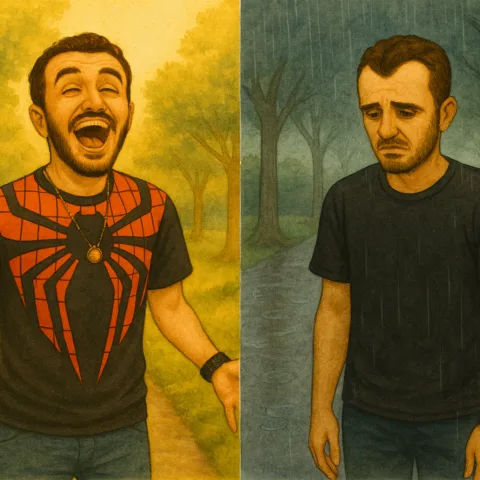
After having explored autism in detail in my previous articles, it is now time to talk about my bipolar episodes, following the chronological order in which my cycles evolve. When people think of bipolar disorder, they often imagine someone who is sometimes sad, sometimes happy — someone who simply has mood swings (the definition of a “moody” person, essentially). The reality is far more complex. With bipolar disorder, a person oscillates between euphoric episodes and depressive ones. It is a very serious disorder that requires regular medical care to allow the affected person to function.
5 to 8% of autistic people are believed to be affected by bipolar disorder, and yet, this association between the two conditions is rarely mentioned in the literature. When you type “autism and bipolar disorder” into Google, finding a personal account can feel like a challenge. A few years ago, I took part in a podcast on this topic, sharing an experience that was almost unique—especially in France. The idea of a blog exploring both subjects in detail slowly began to form a few weeks ago. A few days later, the project was underway.
This blog is not intended to talk only about autism. From the beginning, when the idea for this project emerged, I hoped to provide a rare and in-depth testimony about two of my conditions: autism and bipolar disorder. Why rare? Simply because I noticed how drastically the literature lacks first-person accounts from people living with both conditions, even though this comorbidity is actually quite common — with bipolar disorder being even more frequent among autistic people than allistic individuals. And in-depth, because I intended to share my experience honestly and without filter through a long series of articles detailing what it means to live with both conditions.
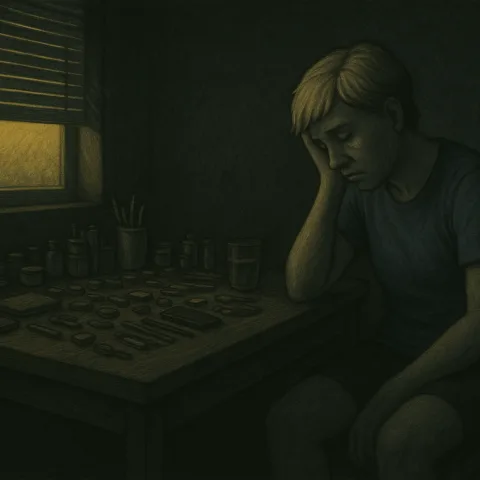
Autistic burnout is often compared to a prolonged shutdown. More specifically, it is a state of physical, mental, emotional, and sensory exhaustion that can affect autistic people after a prolonged period of overload or sustained social masking. Unlike ordinary fatigue, it can last for several months and lead to a significant loss of everyday functioning.
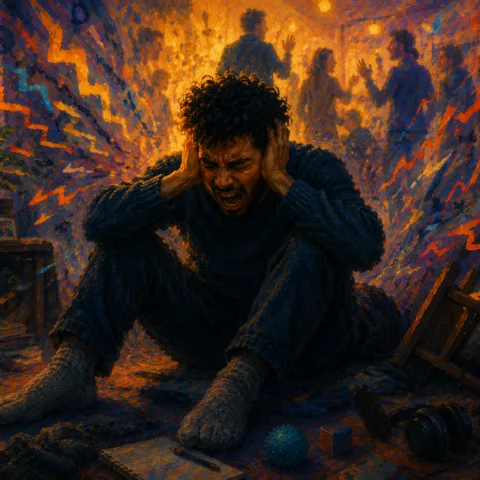
If shutdown is the implosion, meltdown is the explosion. A visible, loud, and often misunderstood crisis. The stereotype of the autistic person banging their head against a wall is common. For many autistic individuals, this is a real experience — but it is not universal. Still, many autistic people experience these crises to varying degrees and frequencies. A meltdown generates an intense emotional discharge that can leave the autistic person completely drained of energy. After discussing autistic crises more broadly, this article focuses specifically on meltdowns.

Autistic crises are an integral part of life for many autistic people. After discussing them broadly in a previous article, it’s important to describe them in detail, starting with shutdowns, often described as autistic collapse or social withdrawal. A shutdown is also defined as autistic withdrawal, an involuntary response triggered by sensory or emotional overload. Yet the reality goes far beyond simple withdrawal — it is a neurological reaction in autistic individuals, designed to short-circuit an overload the brain perceives as danger.

In the collective imagination, an autistic person is someone withdrawn, exceptional at math, calm, and rocking back and forth. What many people don’t realize is that autistic individuals can also experience intense emotional outbursts (meltdowns) and internal shutdowns (shutdowns). These crises have various causes, but sensory overload is the most common trigger.

Sometimes the best fits of laughter come from pure randomness. I’m continuing my trip through Cambodia with my friends, passing through Skun — the town of fried tarantulas — and a deluxe hotel at 20 euros a night, just for the experience. These past two weeks, I’ve cried from laughing at least once a day. Goal: one daily tear-inducing laugh during these 25 days of travel.

Almost two weeks spent in Cambodia. A few autistic crises along the way, but above all a lot of laughter with my friends (sometimes to the point of crying) and discoveries I had missed during my two-month end-of-studies internship in the country back in 2017. This week was also an opportunity to reflect on a number of subjects that matter a lot to me: languages, what it really means to travel abroad when you’re completely out of your depth, and even theory of mind (spoiler alert: it was the allistic side that failed this time). A rich and introspective interlude.