

Autism

Autism and bipolar disorder: a dual experience that is common yet largely understudied

No Comments

5 to 8% of autistic people are believed to be affected by bipolar disorder, and yet, this association between the two conditions is rarely mentioned in the literature. When you type “autism and bipolar disorder” into Google, finding a personal account can feel like a challenge. A few years ago, I took part in a podcast on this topic, sharing an experience that was almost unique—especially in France. The idea of a blog exploring both subjects in detail slowly began to form a few weeks ago. A few days later, the project was underway.

Meltdown: the autistic explosion

No Comments

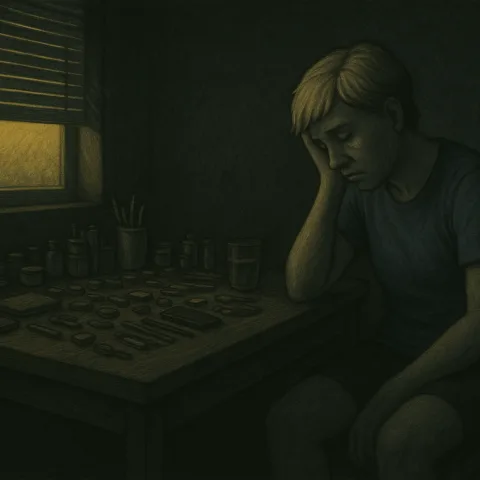
If shutdown is the implosion, meltdown is the explosion. A visible, loud, and often misunderstood crisis. The stereotype of the autistic person banging their head against a wall is common. For many autistic individuals, this is a real experience — but it is not universal. Still, many autistic people experience these crises to varying degrees and frequencies. A meltdown generates an intense emotional discharge that can leave the autistic person completely drained of energy. After discussing autistic crises more broadly, this article focuses specifically on meltdowns.

Shutdown: the autistic implosion

No Comments

Autistic crises are an integral part of life for many autistic people. After discussing them broadly in a previous article, it’s important to describe them in detail, starting with shutdowns, often described as autistic collapse or social withdrawal. A shutdown is also defined as autistic withdrawal, an involuntary response triggered by sensory or emotional overload. Yet the reality goes far beyond simple withdrawal — it is a neurological reaction in autistic individuals, designed to short-circuit an overload the brain perceives as danger.

Shutdown and meltdown: understanding autistic crises

No Comments

In the collective imagination, an autistic person is someone withdrawn, exceptional at math, calm, and rocking back and forth. What many people don’t realize is that autistic individuals can also experience intense emotional outbursts (meltdowns) and internal shutdowns (shutdowns). These crises have various causes, but sensory overload is the most common trigger.

Autism: my everyday sensory strategies

No Comments

Recently, I visited my local disability support office in France in a region where a cyberattack had wiped out all their electronic files. The waiting room was crowded and loud. Instinctively, I put my sunglasses back on. My caseworker looked surprised, but my mother burst out laughing—she immediately understood what was happening. It was compensation. I needed to be able to hear my number being called and then hear the person at the desk. Noise-canceling headphones weren’t an option. So instead, I used my sunglasses to reduce—not the sound itself—but the overall sensory load my brain was processing.

Stimming and autism: my sensory language in daily life

No Comments

Stimming, often simply called stims in the autistic community, refers to repetitive movements or sounds that may look like tics to the untrained eye. Yet stims and tics are very different. Stims are regular, repetitive, rhythmic, and seem to serve no purpose. “Seem” is the key word: they actually play an essential role in sensory and emotional regulation for autistic people. In short, they are essential to their well-being.

Autism: understanding the body’s invisible senses

No Comments

I’ve already talked about the five main senses (hearing, sight, touch, smell, taste), but the human body has several others — most notably four: the vestibular system, proprioception, nociception, and thermoception. The last one you know well: it’s the reason you turn into an ice cube in winter and a boiling pot in summer. In autistic people, these senses are often altered in the same way as the five primary ones. Yet these so-called invisible senses shape our everyday experience. When they are atypical — as is often the case in autism — they can turn ordinary situations into a full emotional and sensory rollercoaster.

Hypersensitivities and hyposensitivities in autism: between too much and not enough

No Comments

One of my oldest memories is watching tiny floating dust particles in the light of my bedroom window. That sight fascinated me. And yet, for most of my life, my sensory sensitivities have been my greatest struggle. They were the main trigger for my autistic meltdowns. When I experienced my first autistic burnout, my sensory hypersensitivities intensified to the point where I described them as “broken.” Things that used to bother me mildly — or things I had adapted to — suddenly became unbearable. Since sensory sensitivities are a core part of the diagnostic criteria and a major aspect of autistic life, it feels important to explain them and share my experience.